
01
Architecture & discovery
Translate business constraints into a technical model: responsibilities, boundaries, data movement, interfaces, risks and a realistic evolution path.
We design platforms around demanding requirements: complex workflows, sensitive information, multiple systems, high change rates and long operational lives.
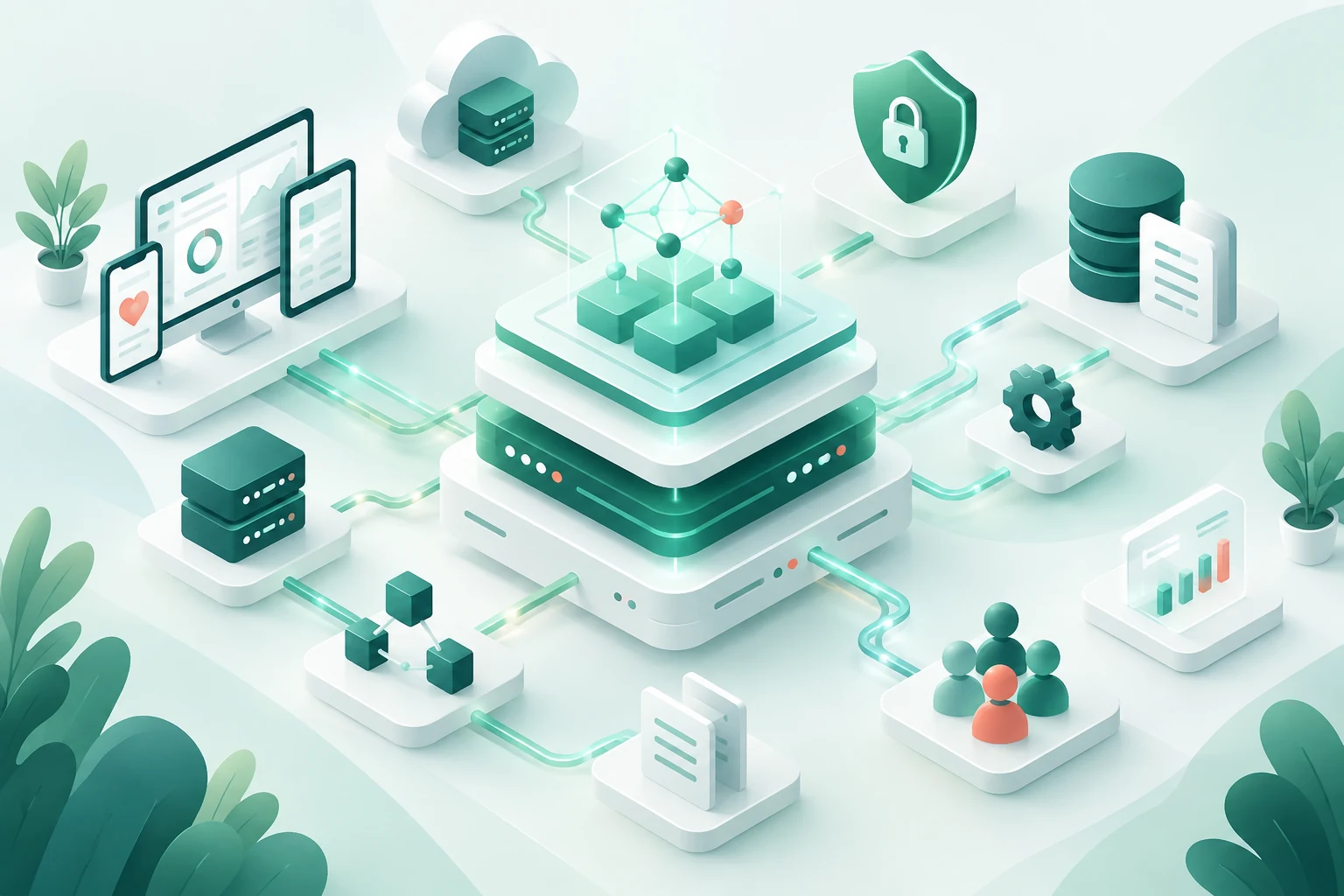
Translate business constraints into a technical model: responsibilities, boundaries, data movement, interfaces, risks and a realistic evolution path.
Deliver web, mobile, APIs, workflows and service integrations using modular patterns appropriate to the scale and criticality of the platform.
Incrementally replace fragile dependencies, improve observability and security, and create room for ongoing product evolution.
Our platform engine is a reusable architectural foundation, not a one-size-fits-all product. It shortens the distance between a complex requirement and a maintainable implementation.
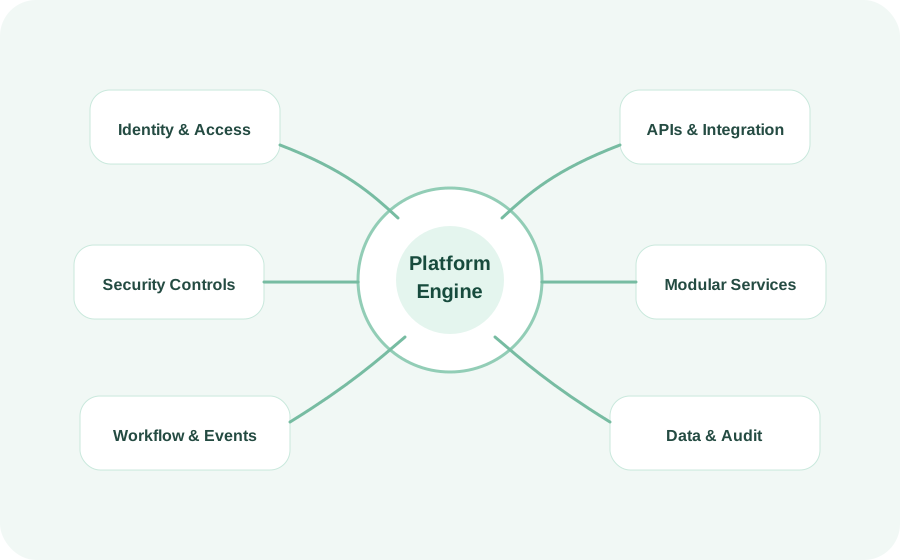
We are most useful when the hard part is the interaction between technology, data, process and people rather than simply producing screens.
Products or services that need a strong foundation from the beginning, especially where access control, integrations and long-term extensibility matter.
Existing platforms that cannot be replaced in one move and need a staged, lower-risk route toward a cleaner architecture.
Systems where reconciliation, multiple data sources, auditability and reliable movement of information are core business requirements.
Where AI needs to be integrated into real workflows with appropriate data boundaries, human review, resilience and operational controls.
Complex requirements are easier to solve when the architecture is considered before the implementation becomes expensive to change.
Discuss your platform →